

Table of Contents
Hair Oil Showdown: Your Ultimate Guide to Argan, Coconut, and Jojoba
Hair Oil Showdown is a term that perfectly captures the modern dilemma of navigating the crowded shelves of hair care. With countless bottles promising shine, strength, and frizz-free perfection, it’s easy to feel overwhelmed. Three champions consistently rise to the top of the conversation: Argan, Coconut, and Jojoba oil. But while they are all-natural powerhouses, they are not interchangeable. Each oil possesses a unique molecular structure, a distinct set of benefits, and an ideal hair type it’s destined to transform. Understanding the difference between them is the key to unlocking your hair’s true potential and ending the cycle of trial and error. This guide will break down the science, benefits, and best uses of each, helping you declare a clear winner for your personal hair care routine.
Introduction
The journey to luscious, healthy hair is often paved with good intentions and a cabinet full of products. Among the most revered of these are natural oils, celebrated for their ability to moisturize, protect, and add a brilliant luster. But which one should you choose? In this detailed comparison, we’ll put three of the most popular hair oils head-to-head. We’ll explore the rich, reparative qualities of Argan oil, the deep-penetrating power of Coconut oil, and the unique scalp-balancing properties of Jojoba oil. Get ready to discover the science behind how they work and finally determine which oil is the perfect match for your hair’s specific needs.
Meet the Contenders: A Closer Look at Each Oil
Before we dive into the direct comparison, let’s get acquainted with our three competitors. Each brings a unique history and chemical composition to the table.
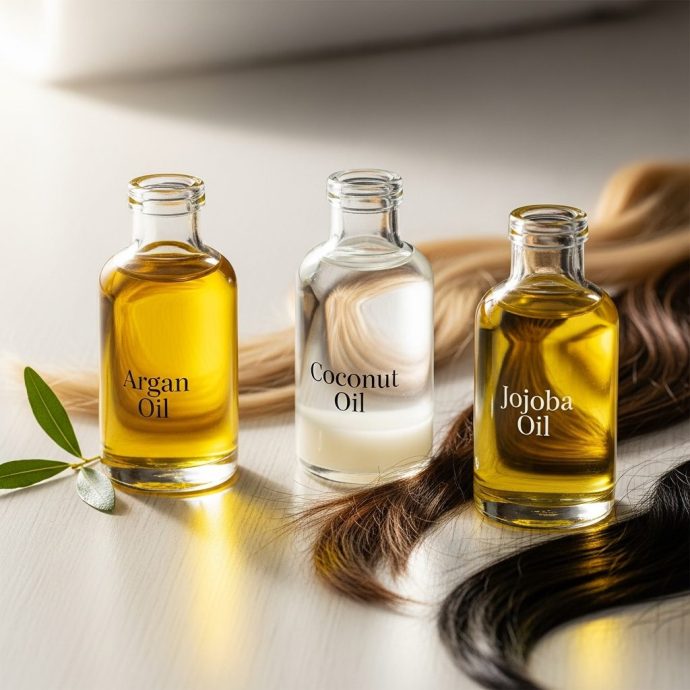
- Argan Oil: Often called “liquid gold,” this luxurious oil is extracted from the kernels of the Argan tree, native to Morocco. It’s rich in antioxidants, essential fatty acids (like oleic and linoleic acid), and Vitamin E. Its reputation is built on its ability to fight frizz and add incredible shine without a heavy, greasy feel, making it a favorite for styling and finishing.
- Coconut Oil: A true tropical treasure, coconut oil is extracted from the meat of mature coconuts. Its magic lies in its high concentration of lauric acid, a medium-chain fatty acid with a small molecular structure. This allows it to do something many oils can’t: penetrate deep inside the hair shaft.
- Jojoba Oil: Hailing from the seeds of the Jojoba shrub found in North American deserts, this ingredient is technically not an oil but a liquid plant wax. Its molecular structure is remarkably similar to sebum, the natural oil produced by our own scalps. This unique characteristic makes it an exceptional choice for scalp health and balancing oil production.
The Science of Hair Penetration: Inside Out vs. Outside In
To truly understand which oil is right for you, we need to look at how they interact with the hair strand. Hair oils generally fall into two categories: penetrating and sealing.

Penetrating Oils: These oils have small enough molecules to pass through the hair’s outer layer (the cuticle) and enter the inner cortex. They work from the inside out to strengthen and moisturize, helping to prevent protein loss that occurs during washing and styling. Coconut oil is the star player in this category.
Sealing Oils: These oils have larger molecules that can’t easily penetrate the hair shaft. Instead, they form a protective, moisture-locking barrier around the outside of the hair strand. This seals in hydration from water or leave-in conditioners, smooths the cuticle, reduces frizz, and adds shine. Jojoba oil is a classic sealing oil.
Argan oil sits comfortably in the middle. While it has some ability to penetrate, it also excels as a surface-level sealant and protectant, offering the best of both worlds.
The Ultimate Hair Oil Showdown: Benefits and Best Uses
Now it’s time for the main event. Here’s how our contenders stack up when applied to specific hair goals and types.
Argan Oil: The All-Round Finisher
- Best For: All hair types, especially those with frizz, moderate dryness, or heat-damaged hair. It’s light enough for most fine hair in small amounts.
- Key Benefits: Tames flyaways and frizz, adds instant shine, acts as a natural heat protectant, and provides antioxidant protection against environmental damage.
- How to Use: Best used as a finishing product. Apply a few drops to the palms of your hands, rub them together, and smooth over dry or damp mid-lengths and ends to add shine and control frizz. It’s also excellent as a pre-styling heat protectant.
Coconut Oil: The Deep Conditioner
- Best For: Thick, coarse, very dry, or protein-damaged hair. It can be too heavy for fine or low-porosity hair, potentially causing buildup or a greasy look.
- Key Benefits: Deeply moisturizes from within the hair shaft, prevents protein loss to reduce breakage and split ends, and strengthens the hair’s core structure.
- How to Use: Best used as a pre-shampoo treatment. Apply liberally to dry hair, focusing on the ends, and let it sit for at least 30 minutes (or even overnight) before washing it out thoroughly.
Jojoba Oil: The Scalp Balancer
- Best For: Fine or oily hair types, as well as those with scalp issues like dryness, dandruff, or product buildup.
- Key Benefits: Its sebum-like structure helps regulate the scalp’s oil production, potentially making an oily scalp less greasy and a dry scalp more moisturized. It cleanses follicles and soothes irritation.
- How to Use: Ideal for scalp massages. Part your hair and apply a few drops directly to the scalp, massaging gently for 5-10 minutes before shampooing. It can also be used sparingly on ends to seal in moisture without weighing hair down.

How to Choose the Right Oil for Your Hair Type
Still undecided? Here’s a quick guide to making your final choice:
- If you have fine hair that gets greasy easily, Jojoba Oil is your winner. It will balance your scalp and moisturize your ends without the weight.
- If you have thick, dry, and damaged hair that needs serious repair, Coconut Oil is your deep-treatment champion. Use it as a mask to restore strength and moisture.
- If your primary goal is to fight frizz, add shine, and protect your hair from daily styling, Argan Oil is your versatile go-to. It’s the perfect everyday finisher for a polished look.
Conclusion
In the great hair oil showdown, there is no single universal champion—only the champion for you. The winner depends entirely on your hair’s texture, porosity, and primary concerns. Coconut oil excels at deep, internal repair for thick and damaged hair. Jojoba oil stands unmatched as a scalp regulator for those with oily or sensitive scalps. And Argan oil reigns supreme as the versatile, frizz-fighting finisher for nearly everyone. By understanding the unique strengths of each, you can move beyond the hype and select the oil that will truly nourish your strands, bringing you one step closer to your ultimate hair goals.